They sit on the shelf next to the pregnancy tests, they cost about the same, and the box promises to tell you whether you are menopausal. The honest answer is that a home test can tell you something, but almost never the thing you actually want to know, and understanding why saves you both the money and the false reassurance.
What a home menopause test measures
Nearly all of them measure one hormone: follicle stimulating hormone, or FSH. As the ovaries wind down they respond less readily, so the body sends more FSH to push them along, and the level in your blood and urine rises. That much is real biology. A raised FSH genuinely does reflect ovaries doing less than they used to.
Why one reading proves so little
The problem is the timing, not the chemistry. In the years leading up to menopause FSH fluctuates considerably over short periods. It is not a line that climbs steadily and stays climbed. The same woman can produce a raised reading one week and an entirely ordinary one a fortnight later, because that swinging is itself part of what perimenopause is.
So a normal result does not rule perimenopause out, and a raised one does not confirm it. You have measured one day. The thing you are asking about takes years.
Over 45, it is not diagnosed by a test at all
This is the part the box does not tell you. In an otherwise healthy woman over 45 with menopausal symptoms, perimenopause and menopause are diagnosed clinically, from the symptoms and the pattern of your periods. A hormone level is not a useful addition to that, which is precisely why your GP may decline to arrange one and why you should not read that refusal as being dismissed.
Menopause itself is diagnosed after twelve months without a period, if you are not using hormonal contraception. Before that point you are in perimenopause, and there is no single test that puts a date on it.
When a hormone test does earn its place
There are real exceptions, and they are the reason this is a conversation with a clinician rather than a purchase. A hormone test carries much more weight if you are under 45, if you are between 40 and 45 with periods that have become infrequent or stopped, or if your symptoms are unusual enough that something else needs ruling out. In those situations the result changes what happens next, which is the only thing that makes a test worth doing.
What actually answers the question
If a single number cannot tell you where you are, what can? A structured account of your symptoms, scored rather than remembered, alongside what your periods have been doing. That is what a clinician is working from anyway, and it is the one thing a pharmacy kit cannot produce. It is also the thing most women arrive at the appointment without, which is how fifteen years of symptoms get compressed into a rushed ten minutes.
Rather than buy a kit, get the picture a clinician would actually use
A free, structured symptom assessment you can read yourself or take to your GP. No test to post, no result to misread.
The blood tests that matter later are a different thing
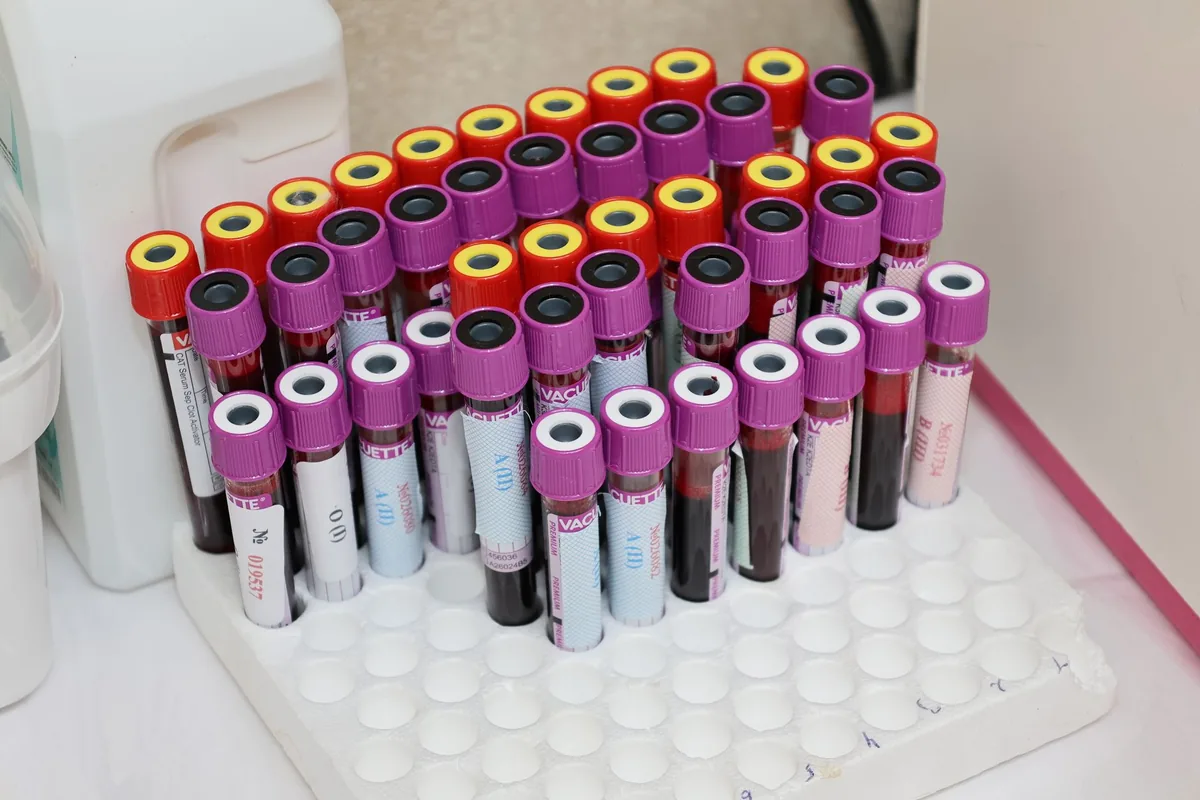
It is worth separating two things that get muddled, because we arrange the second kind and would rather you knew the difference. A pharmacy FSH kit is trying to answer am I menopausal, and for most women it cannot. The blood tests taken once you are on treatment answer something else entirely: whether levels sit where they were intended, and whether it is safe to carry on. Those are not optional, they repeat, and they are not the same purchase as a one-off box from the pharmacy shelf.
In other words, do not let a disappointing home test put you off testing altogether. The testing that matters comes after a decision, not before one.
What to do instead
- •Write down your symptoms and roughly when they started, rather than trying to recall them in the appointment.
- •Track your periods, including how the pattern has changed, because that is what the diagnosis actually rests on.
- •If you are under 45, say so early, since that is the case where a hormone test genuinely helps.
- •Ask what the result would change before agreeing to any test, at your GP or anywhere else.
- •Take a written summary with you. It is the difference between being believed quickly and being sent away to come back in six months.
Frequently asked questions
Do menopause test kits work?
They measure FSH accurately enough, but FSH swings considerably from week to week during perimenopause, so a single reading cannot confirm or rule it out. Over 45 the diagnosis is made clinically from symptoms and periods rather than from a hormone level.
Can a blood test tell me if I am in perimenopause?
Not reliably, if you are over 45 and otherwise healthy. It carries more weight under 45, between 40 and 45 with irregular or absent periods, or where symptoms are atypical and something else needs ruling out.
Why won't my GP do a hormone test?
Usually because in a woman over 45 with menopausal symptoms the result would not change the diagnosis or the treatment. It is not a brush-off, though it can feel like one if nobody explains it.
I am under 45. Is it different?
Yes. Under 45, and particularly between 40 and 45 with periods that have become infrequent or stopped, hormone tests are far more useful and are worth asking about directly.
Are the blood tests Solene arranges the same as a home kit?
No, and they answer a different question. A home kit is trying to tell you whether you are menopausal. The tests arranged around treatment check that levels are where they were intended and that it is safe to continue, which is a separate thing that repeats over time.