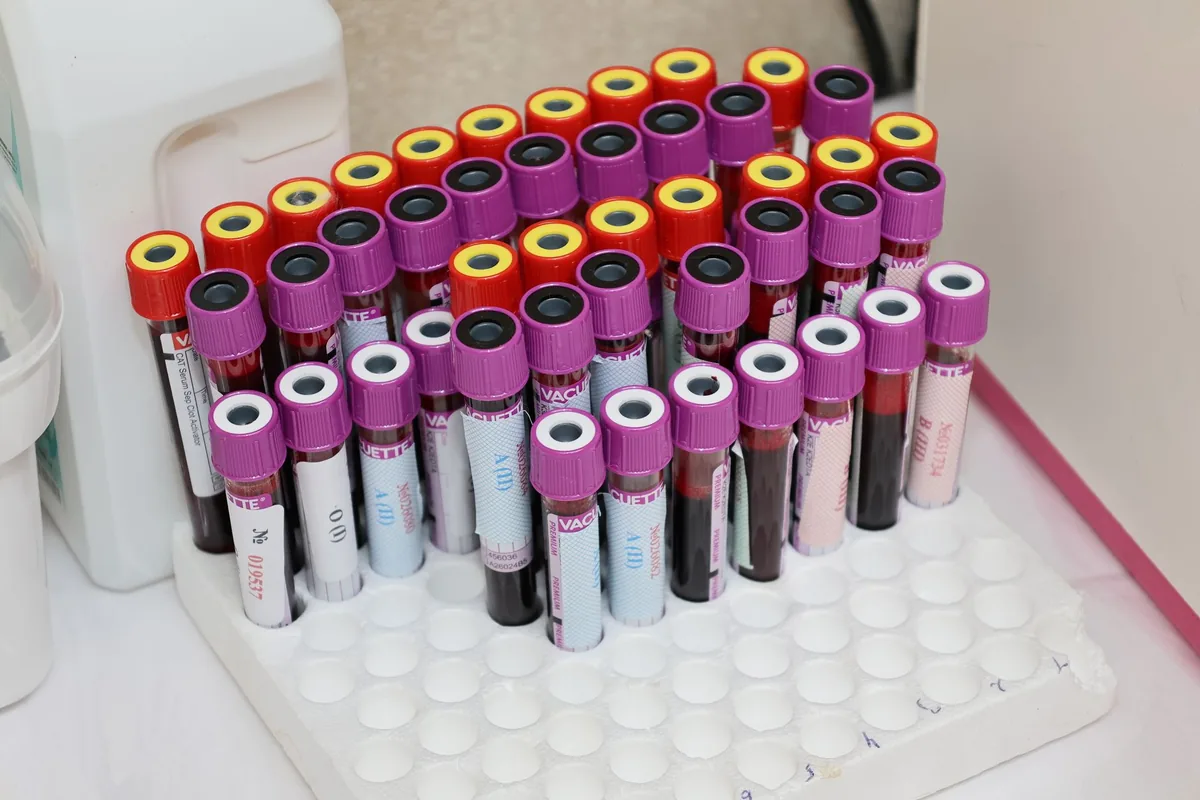
Blood tests are part of testosterone treatment rather than an optional extra, and they do two different jobs at two different times. Before you start, they establish where you are. Afterwards, they check that treatment has stayed inside the range intended for women. Neither job is diagnosis, and that distinction is the thing most worth understanding.
What a baseline usually measures
- •Total testosterone, the headline number, and the least useful of the three on its own.
- •SHBG, the protein that binds testosterone and decides how much of it is actually available to you.
- •Free androgen index, calculated from the two above, which is the figure a prescriber tends to look at.
Panels often include oestradiol, FSH, LH, progesterone and prolactin alongside them, because the point of a baseline is the whole hormonal picture rather than one hormone in isolation.
What a test cannot tell you
It cannot tell you whether you will benefit. There is no threshold below which testosterone works and above which it does not, and plenty of women with unremarkable numbers have troubling symptoms. The decision to treat comes from the conversation, not the result. What the baseline is genuinely for is to show that nothing else is going on, and to give you both a starting point to compare against later.
It also cannot diagnose menopause. The NHS position is that menopause is usually diagnosed from your symptoms and your age rather than from a blood test.
Monitoring afterwards, and why it exists
The purpose of monitoring is to keep levels inside the female physiological range. Too little does nothing; too much brings the effects nobody wants. Because there is no product licensed for women, and the products used were designed for male doses, this is exactly where care is taken. A repeat is usually taken a few months after starting, then at longer intervals once a dose has settled.
Practical things that change the result
- •Timing. There is a right point in the day and, if you still have cycles, in the month. You will be told which.
- •Where you apply it, and where the blood is taken from. Cream on the arm and a sample from that arm can contaminate the result, so it is worth asking.
- •Biotin in multivitamins and hair supplements interferes with several hormone assays. Prescribers often ask you to pause it beforehand.
- •Consistency. The same laboratory each time makes results comparable in a way that switching does not.
The other half of monitoring is what you notice yourself, which often shows up before a blood result does. That is covered in testosterone side effects in women, and what gets monitored.
Home kit or a clinic?
Both are used. A home collection kit posted back to an accredited laboratory measures the same markers as a clinic draw, and suits monitoring well. Some prescribers prefer a venous sample taken in a clinic, particularly for a baseline. What matters more than the route is that the laboratory is accredited, the markers are the right ones, and the timing was right.
How Solene fits
Monitoring is built into our plans rather than sold as an add-on, and the results go to the prescriber who is actually treating you. See what is included.
Wondering what is worth testing in your case?
Map your symptoms in under 10 minutes and get free, personalised advice, then talk to a nurse prescriber if you want to.
Frequently asked questions
Do I need a blood test before starting testosterone?
Yes. A baseline establishes your starting point and helps rule out other explanations. It does not predict whether you will benefit.
Can a blood test tell me if I need testosterone?
No. There is no level below which it works and above which it does not. The decision comes from your symptoms and history, with the test as context.
How often are tests repeated?
Usually a few months after starting, then at longer intervals once the dose has settled. The purpose is keeping levels within the range intended for women.
Can I use a home blood test kit?
Often yes, provided the laboratory is accredited, the markers are the right ones and the timing follows your prescriber's instructions.
Do blood tests diagnose menopause?
Generally no. The NHS position is that menopause is usually diagnosed from your symptoms and age rather than from a blood test.