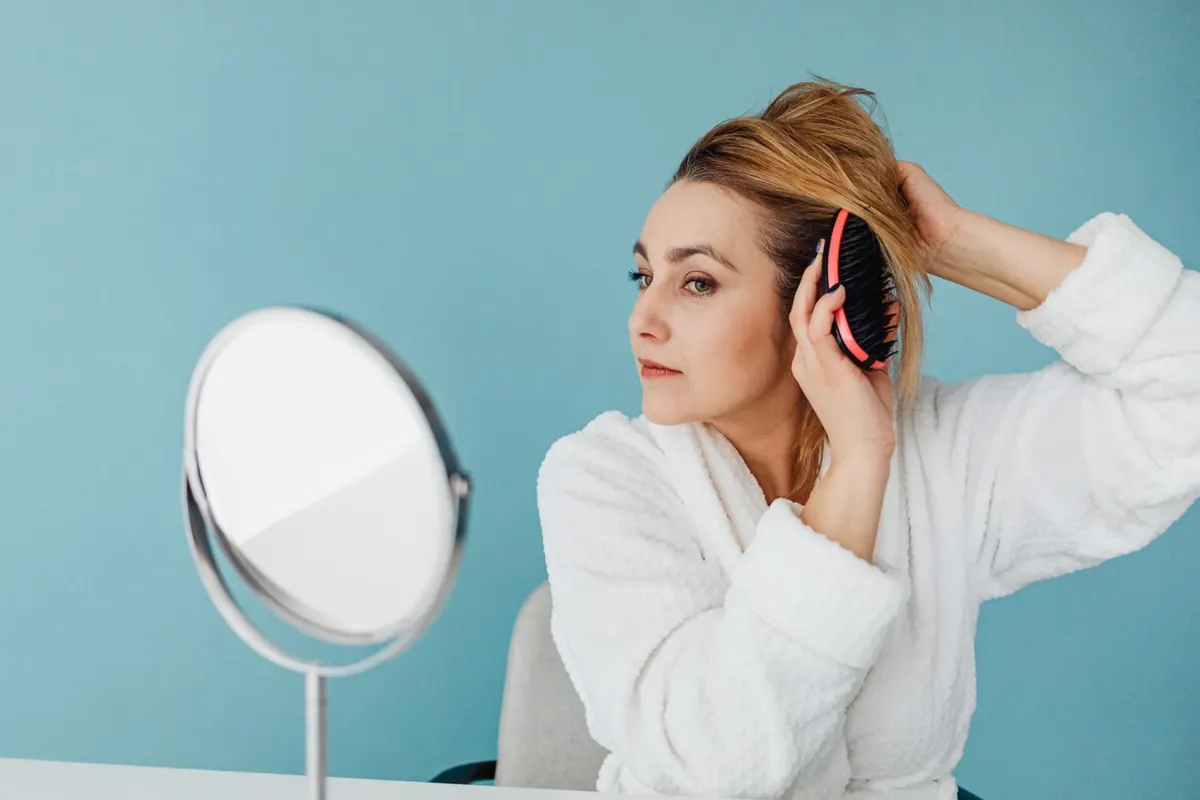
Finding more hair in the brush, a wider parting or thinner ponytail is a common and upsetting part of menopause. It is largely hormonal: as oestrogen falls, hair grows more slowly, sheds more easily and can become finer. For most women it is a gradual thinning across the scalp rather than bald patches.
Why menopause causes hair thinning
- •Oestrogen helps keep hair in its growing phase; as it falls, more hairs shed and regrowth slows.
- •The relative balance of androgens can shift, which can thin hair at the crown and parting.
- •Stress, poor sleep and low iron or thyroid problems, all common at this age, add to it.
- •Crash diets and low protein can make shedding worse.
Is hair loss a menopause symptom?
Yes, thinning hair is a recognised feature of perimenopause and menopause, though it is worth ruling out other causes such as iron deficiency or thyroid issues, which are treatable and common in midlife.
What can help
- •A blood test to check iron, ferritin and thyroid, since these are fixable causes.
- •Enough protein, and a balanced diet rather than crash dieting.
- •Being gentle with hair: less heat, tight styles and harsh treatments.
- •Managing stress and sleep, which both affect the hair cycle.
- •Discussing whether treating the hormonal change is appropriate for you.
How Solene fits
Solene is a nurse-led menopause service that looks at the whole picture. A nurse prescriber working through a CQC-registered practice can help you tell hormonal thinning from other treatable causes such as low iron or thyroid, and talk through what helps, with no GP referral and no waiting list. Solene is the platform, not the clinical provider.
This article is general information, not medical advice. Speak to a qualified clinician about your own care.
Frequently asked questions
Is hair loss a symptom of menopause?
Yes. Falling oestrogen slows hair growth and increases shedding, causing gradual thinning across the scalp for many women in perimenopause and menopause.
Will menopause hair loss grow back?
Hair often stabilises once treatable causes are addressed and hormones settle. Regrowth varies from person to person, so early assessment helps.
Does HRT help menopause hair loss?
For some women, treating the hormonal change helps hair, but evidence is mixed and hair loss has several causes. A clinician can advise on your case.
What else causes hair thinning in midlife?
Low iron or ferritin, thyroid problems, stress, crash dieting and some medical conditions. These are worth checking, as several are treatable.
Should I see someone about menopause hair loss?
Yes, especially to rule out iron or thyroid causes with a simple blood test and to discuss what might help.
Wondering if your hair change is hormonal?
Map your symptoms in under 10 minutes and get free, personalised advice, then talk to a nurse prescriber if you want to.