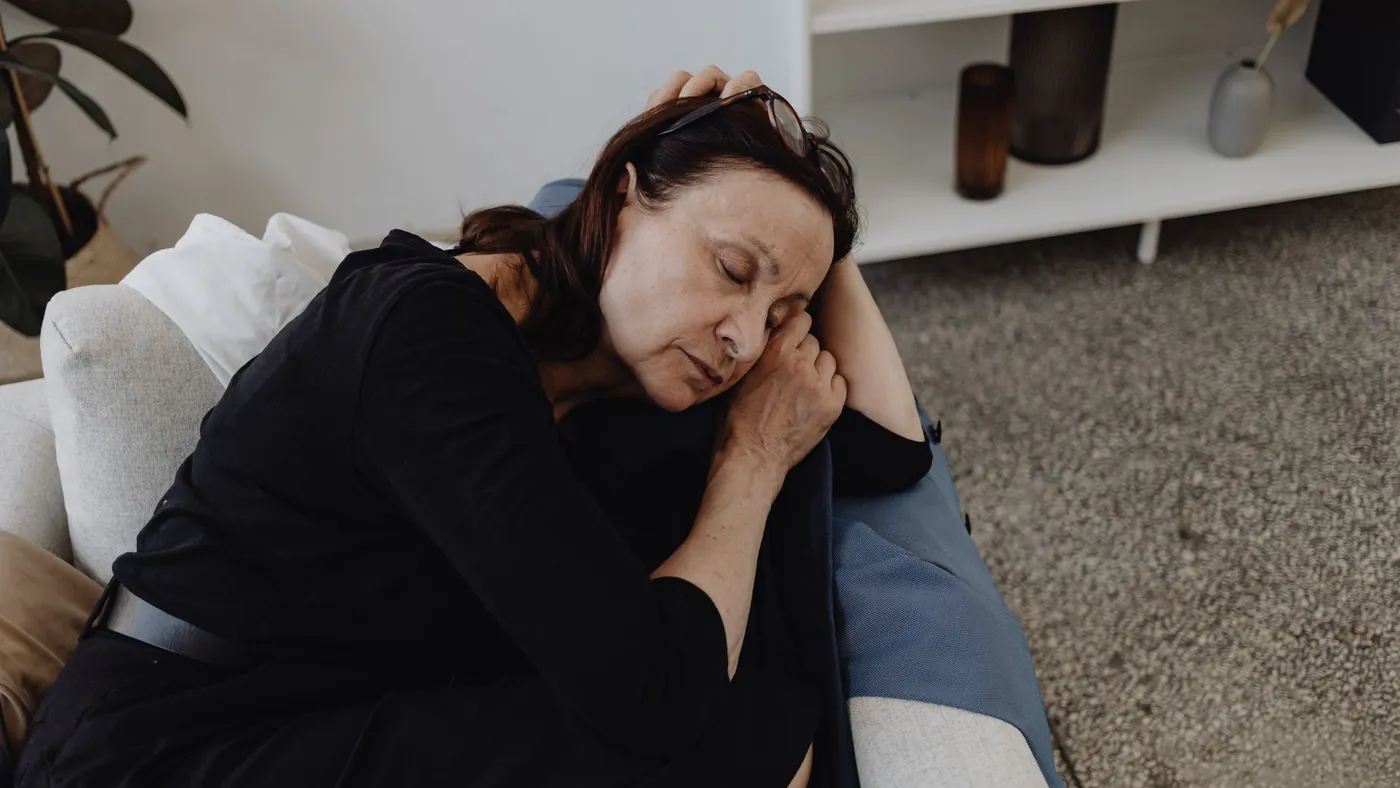
Not ordinary tiredness, the kind a good night fixes, but a bone-deep exhaustion that is there when you wake and drags through the day. If you feel wrung out no matter how much you rest, you are not being lazy or “run down”. Fatigue is one of the most common and most wearing symptoms of perimenopause and the menopause.
Why perimenopause and menopause cause fatigue
Several things stack up at once. Falling oestrogen and progesterone affect energy, mood and the brain chemicals that regulate them. Night sweats and disturbed sleep mean you rarely get properly restorative rest. Add the anxiety and low mood that often come with the transition, and the result is a deep, grinding tiredness that feeds on itself.
What it can look like
- •Waking unrefreshed even after a full night in bed
- •An afternoon crash, or needing to push through a fog to get anything done
- •Low motivation and a shorter fuse, which can look and feel like low mood
- •It often travels with brain fog, poor sleep and night sweats
What can help with menopause fatigue
- •Protect sleep first: a cool room, a consistent wind-down, and managing night sweats claw back the rest fatigue depends on
- •Move a little, often: gentle regular activity and daylight lift energy more than they cost, even when it feels counter-intuitive
- •Steady your blood sugar: balanced meals with protein, rather than sugar-and-caffeine spikes that crash
- •Go easy on alcohol, which fragments sleep and deepens next-day fatigue
- •Make room for recovery rather than pushing through on empty every day
Persistent exhaustion is worth taking to your GP or nurse prescriber, both because, where it is tied to perimenopause, the British Menopause Society (BMS) notes the menopause can be discussed and managed, and because other causes of tiredness (such as thyroid problems or low iron) are worth ruling out with a simple check.
Not sure if it's perimenopause?
Map your symptoms in under 10 minutes and get free, personalised advice, then talk to a nurse prescriber if you want to.
Frequently asked questions
Is extreme tiredness a symptom of perimenopause?
Yes. Fatigue and low energy are very common in perimenopause and menopause, driven by hormone changes plus the poor sleep, night sweats and low mood that often come with them.
Why am I so tired during menopause?
Falling oestrogen and progesterone affect energy and mood, night sweats and broken sleep stop you getting restorative rest, and anxiety adds to it. Together they create a deep, self-reinforcing tiredness.
What helps menopause fatigue?
Protecting sleep, gentle regular movement and daylight, balanced meals to steady blood sugar, and going easy on alcohol all help. Making room for recovery rather than always pushing through matters too.
When should I see a GP about menopause fatigue?
See your GP or a nurse prescriber if exhaustion is affecting your daily life. It is worth a check because other causes like thyroid problems or low iron can look like menopause fatigue and are easily tested for.